
Hi Friends,
Happy Friday!
If you are also subscribed to my Systematize Success newsletter, you should skip the 4 paragraphs below and go straight to this week’s content. Otherwise, you can check it out if you want to start your weeks with inspirational content on personal growth, productivity, and management.
I have been reworking my information processing and knowledge structuring workflows for quite a few months. Those months have been silent in terms of publications, but they were foundational (besides dealing with family and business priorities as well).
I am now using Roam Research as my master repository for connected thinking and networked knowledge management. I am not related to the company in any way, but I can't recommend their product nearly enough. Based on that new platform choice, I have the strong conviction that I won't need to upgrade my knowledge base ever again until Elon releases Neuralink in production.
I regret not having had access to such a life-changing tool from when I was in high-school onwards, but better now than never.
From now on, I will resume sharing my best finds on a weekly basis. I will need more time before I start publishing original writing again but, when I do, it will be more frequent.
Jumping to the actual content…
One thought I am keen to get feedback on:
I never understood the argument that bitcoin *only* has value because other people believe so.
The whole notion of private property relies on social consensus.
We only own that house, that car, or that stock because the rest of society agrees with us.
My most fascinating reads of the week:
SpaceX’s Starship will disrupt Space Exploration as we know it by Casey Handmer
The Perseverance Mars rover cost $2.4 billion, which works out to a few thousand salaries for just under a decade. Thousands of people are needed to build this rover because landing stuff on Mars is so hard that subsystem masses must be tracked to a tenth of a gram, on a system that weighs a tonne. The whole thing is meticulously handcrafted from custom silicon, PCBs, titanium tubes, motors, cameras, and other awe-inspiring instruments. Starship will be able to land 100 of them per flight. Now what? How can NASA feed a team that makes one feather-light rover per decade for a billion dollars if the demand just jumped by a factor of a thousand and the unit cost fell by the same amount? Set up a production line? Work out how to make them with a team of ten? Build one every two weeks?
Why You Should Stop Reading News by Farnam Street (6min)
There are several problems with the way we consume news today:
First, the speed of news delivery has increased.
Second, the costs to produce news have dropped significantly.
Third, producers of news attempt to hijack our brains.
Fourth, the incentives are misaligned.
Personal story: I can’t even remember the last time I read/watched/listened to the news, but I never missed anything that could have had even the slightest impact on my life. The actually important stuff I learn from friends or family - fair enough, if no one at all reads the news, it does not work… but considering human nature this is extremely unlikely to happen.
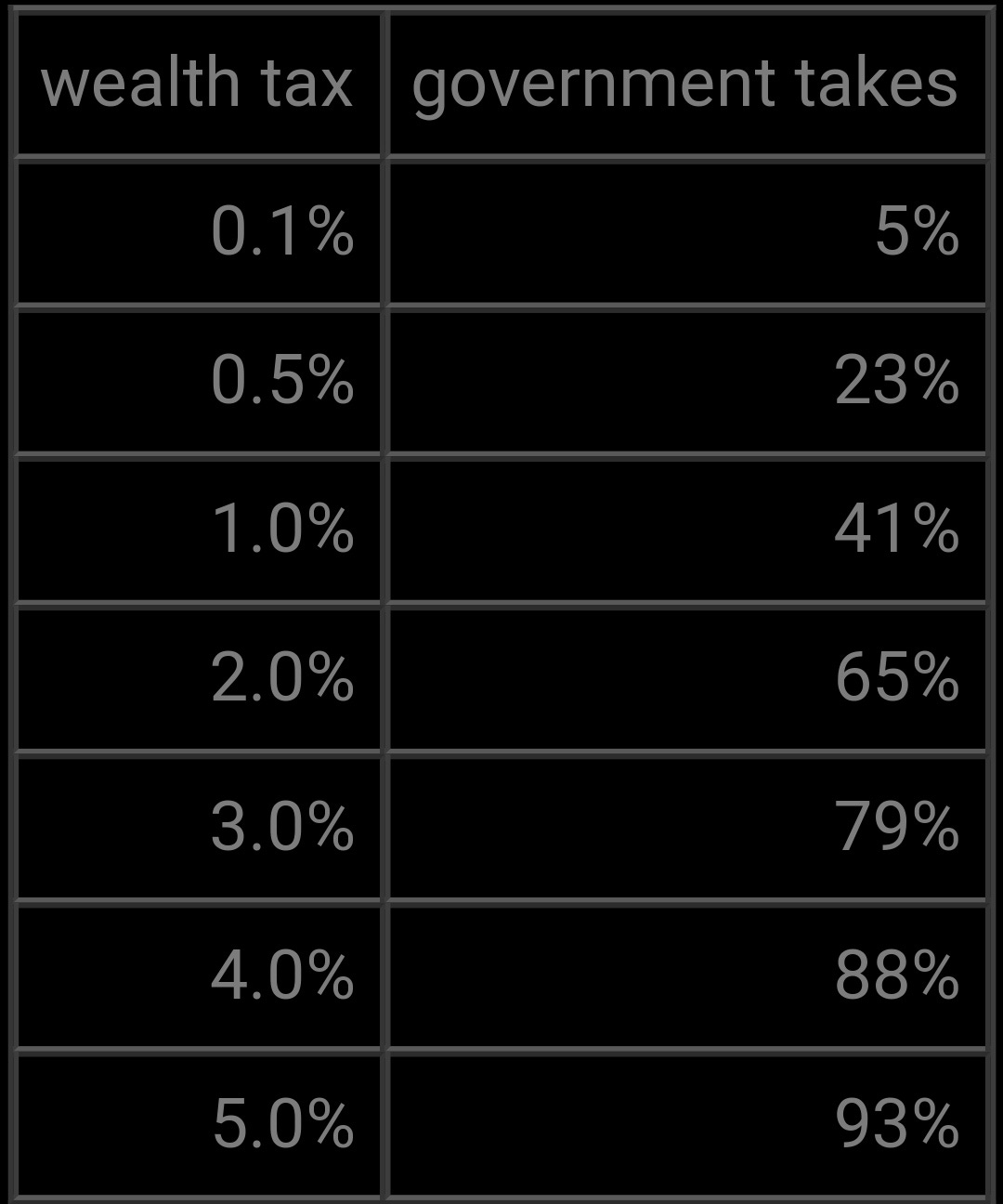
Modeling a Wealth Tax by Paul Graham (2min)
Suppose you start a successful startup in your twenties, and then live for another 60 years.
Suppose your stock is initially worth $2 million, and the company's trajectory is as follows:
the value of your stock grows 3x for 2 years,
then 2x for 2 years,
then 50% for 2 years,
after which you just get a typical public company growth rate, which we'll call 8%.
Suppose the wealth tax threshold is $50 million.
How much of your stock will a wealth tax consume?
What I Think of Bitcoin by Ray Dalio (21min)
While I recognize that Bitcoin can be held offline via “cold storage,” I understand it is difficult to do and that very few people actually do it. So, by and large, my understanding is that, by Bitcoin being digital and connected, it is not protected against cyber risks to my satisfaction. I look forward to being corrected.
Starting with the formation of the first central bank (the Bank of England in 1694), for good logical reasons governments wanted control over money and they protected their abilities to have the only monies and credit within their borders. When I a) put myself in the shoes of government officials, b) see their actions, and c) hear what they say, it is hard for me to imagine that they would allow Bitcoin (or gold) to be an obviously better choice than the money and credit that they are producing. I suspect that Bitcoin’s biggest risk is being successful, because if it’s successful, the government will try to kill it and they have a lot of power to succeed.
Bitcoin's Dramatic Rally Is Reigniting Discussion Around Its Viability as a Storehold of Wealth

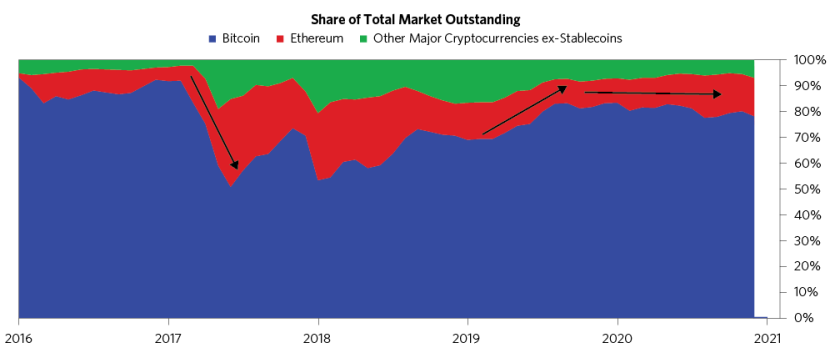

Finite Supply Makes Bitcoin Especially Attractive at a Time When Central Banks Are Printing Aggressively
Similar to gold, Bitcoin has limited usage as a medium for directly exchanging goods and services. Also like gold, however, Bitcoin offers stable and limited issuance that cannot be devalued by central bank printing.
Bitcoin has a hard-coded total supply of 21 million bitcoins, with an issuance rate that automatically halves every few years. It is this feature of Bitcoin that has mainly driven the “digital gold” narrative. As shown below, while Bitcoin’s issuance rate for its first couple of years was initially much higher, its rate of supply growth is now lower than gold’s.
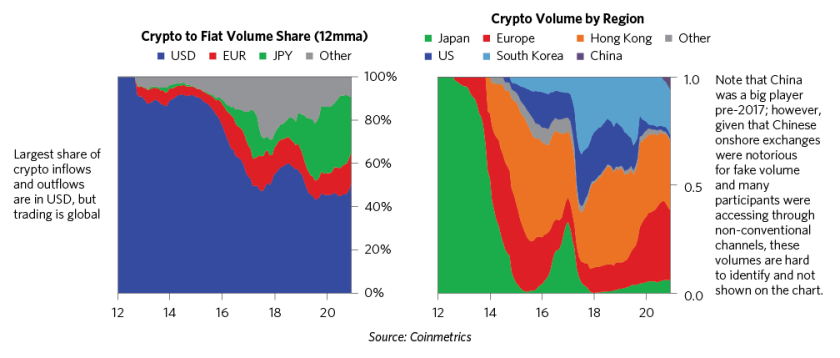
Bitcoin Is Globally Accessible and Easily Portable-Useful Attributes for a Storehold of Wealth
Compared to some other traditional storeholds of wealth such as gold, art, and real estate, Bitcoin is much more easily exchangeable, especially for individual holders. Indeed, given its digital nature, Bitcoin might be the most portable storehold of wealth, much more so than physical cash.
It Remains Unclear If Bitcoin Will Provide Diversification When Portfolios Need It Most
With just over a decade in existence, there is not enough evidence to credibly conclude that Bitcoin, like gold, will reliably offer portfolio diversification in the future.

Bitcoin Institutional Acceptance Slowed by Volatility, Regulatory Uncertainty, and Still-Immature Infrastructure
If a fundamental purpose of a storehold of wealth is to preserve or increase one’s purchasing power over time, we think Bitcoin feels more like an option—it remains a highly volatile and speculative asset. Compared to established stores of value, Bitcoin is not yet widely used as a savings vehicle or reserve asset, with no meaningful participation yet by governments or the largest global institutional allocators.

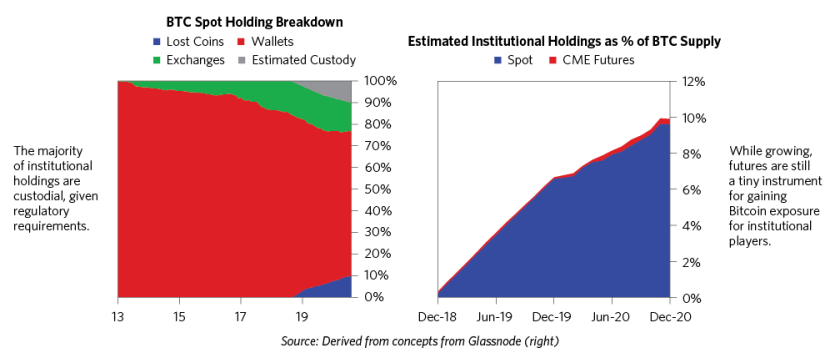
While it is hard to ascertain directly, the charts below show two proxies for the share of Bitcoin used as savings; specifically, the share of Bitcoin in accumulation accounts, and accounts more than 5 years old. Accumulation accounts are accounts that have only purchased Bitcoin and not yet sold any, while “last active” coins are a mix of long-term investors and coins that are likely lost. We see that while long-only players have increased since 2018, their total share remains small (~15%). And, while a decent chunk of bitcoins has not moved in 5+ years (>20%), the majority of supply still looks to be in active or semi-active circulation (suggestive of more speculative trading).
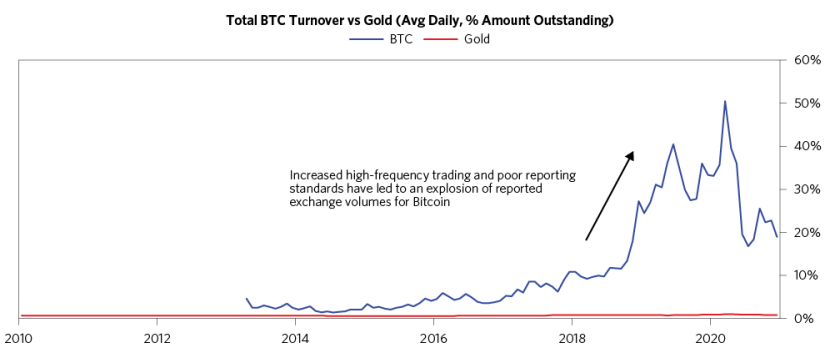
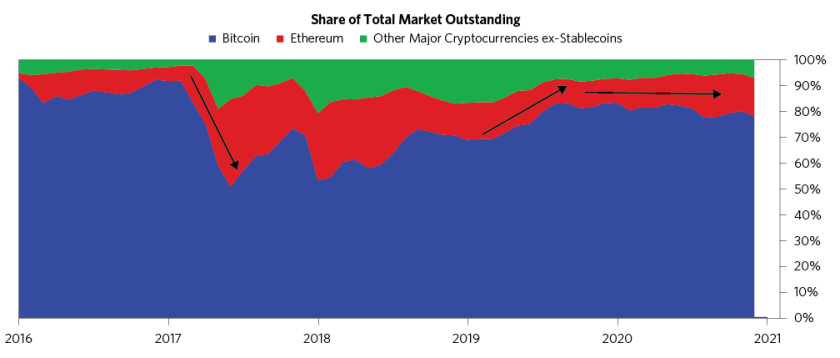
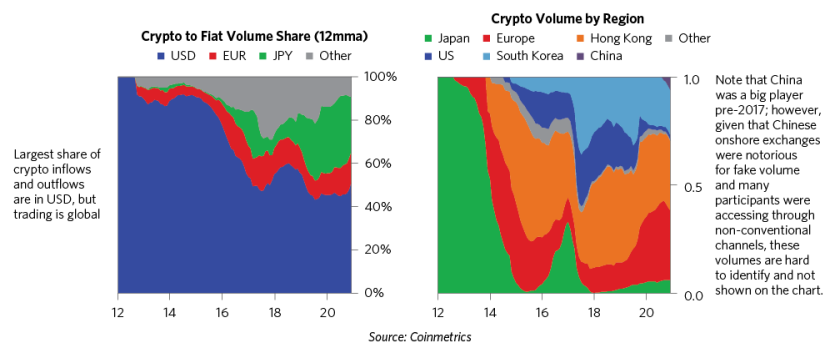
Another way we try to ascertain why Bitcoin is held—whether as a storehold of wealth or for more speculative purposes—is to look at turnover.






Regulatory Outlook for Bitcoin Highly Uncertain; Creates Two-Way Risk
There are two main regulatory paths we think are more likely to play out in the year and years ahead. Either:
Clamping down on Bitcoin and cryptocurrency usage for fear it could undermine traditional fiat currencies that cuts off further development of this asset in its current form, or
Creating a regulatory environment that engenders more trust in the asset longer-term but could lead to heightened volatility along the way.

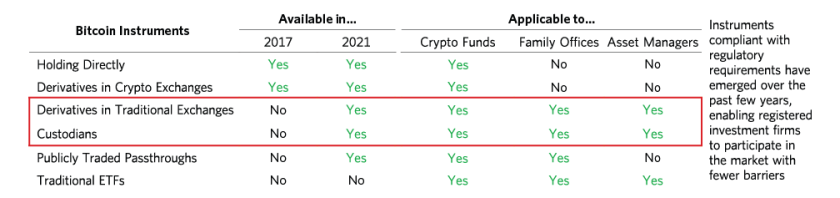
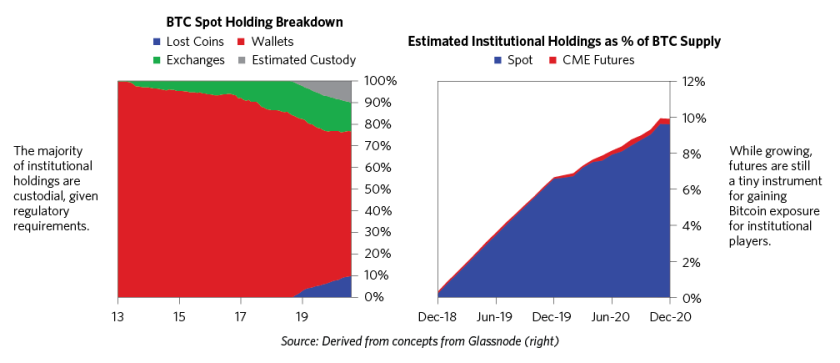
In a best-case scenario, a maturation of crypto regulation that provides assurances around Bitcoin and greater means to access the asset (such as a Bitcoin ETF) could encourage large institutions to increase their exposure.
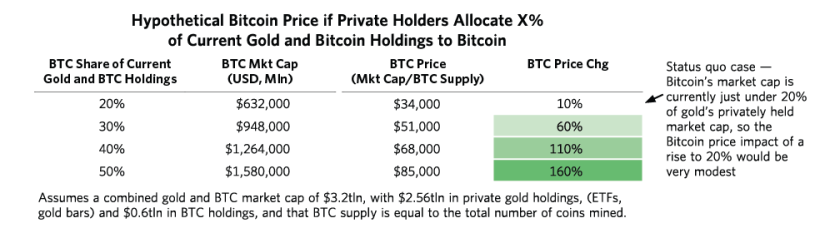
Structural and Operational Challenges Remain for Large Institutions That Want to Hold Bitcoin
In addition to these potential future regulatory developments, broader Bitcoin adoption is also challenged by lack of sufficient regulatory clarity around operational issues and questions around future resiliency.
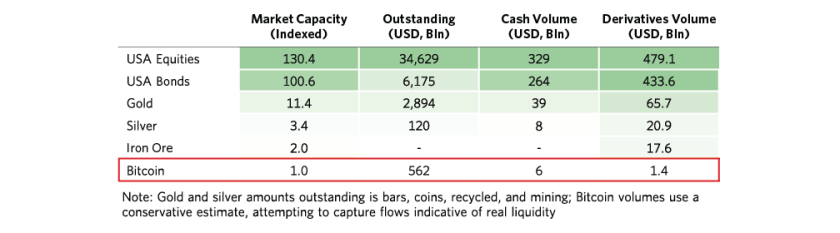
And for large institutions to hold Bitcoin in their portfolios, there also needs to be sufficient liquidity for trades to be conducted in size without destabilizing the market. At this point, while Bitcoin is becoming comparable to some of the markets that Bridgewater trades, it remains small overall despite its liquidity being at an all-time high.




Thanks for reading!
V